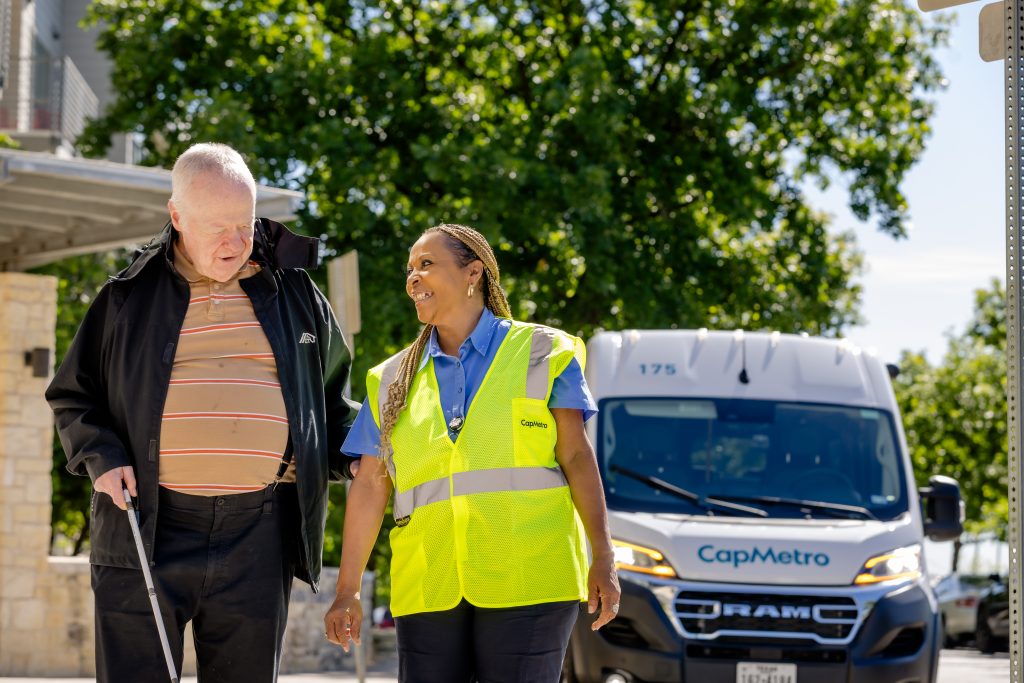

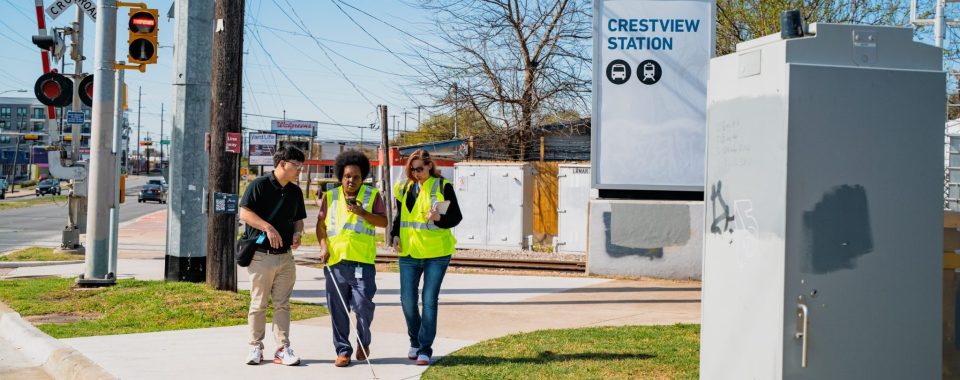
Last year, we introduced you to new wayfinding technology designed to help riders who are blind or have low vision navigate transit more independently. Now, those accessibility initiatives have expanded even more.
From smarter bus stop navigation and onboard audio guidance to live visual interpreting services, CapMetro is continuing to test and expand technology aimed at making public transportation easier and accessible for customers across Central Texas.
And with several new upgrades, customers are beginning to see these tools move beyond pilot concepts and into more real-world transit experiences.
“This work is really about giving people more confidence and independence while navigating public transit,” said Martin Kareithi, CapMetro’s Systemwide Accessibility Director. “We’re continuing to test new tools, listen to customer feedback and explore how technology can create a more accessible experience across the entire system.”
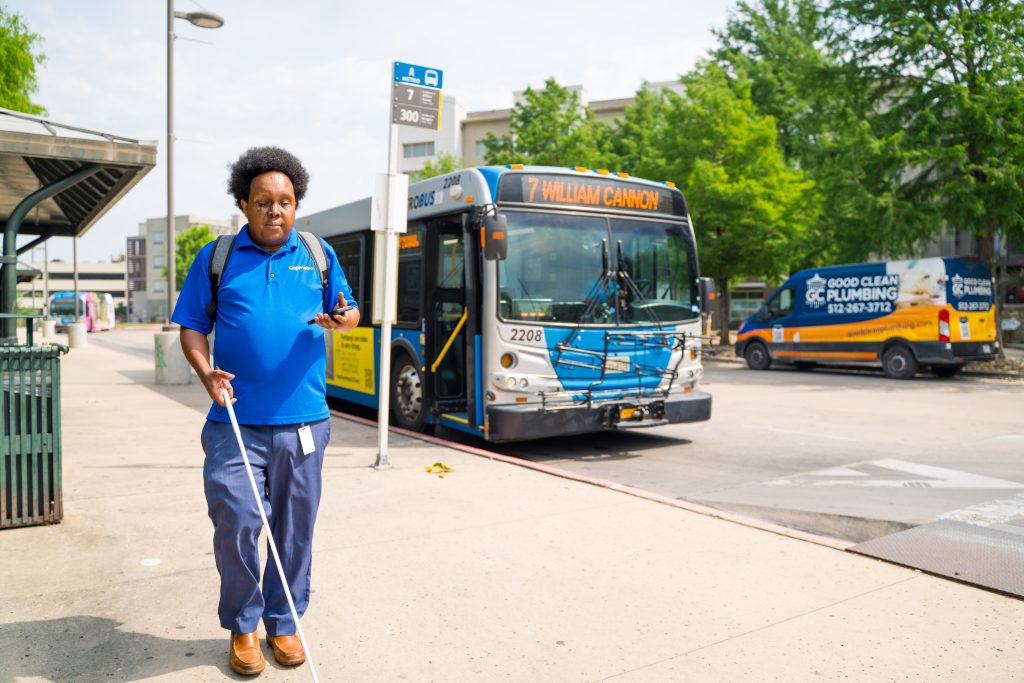
Expanding NaviLens Beyond the Bus Stop
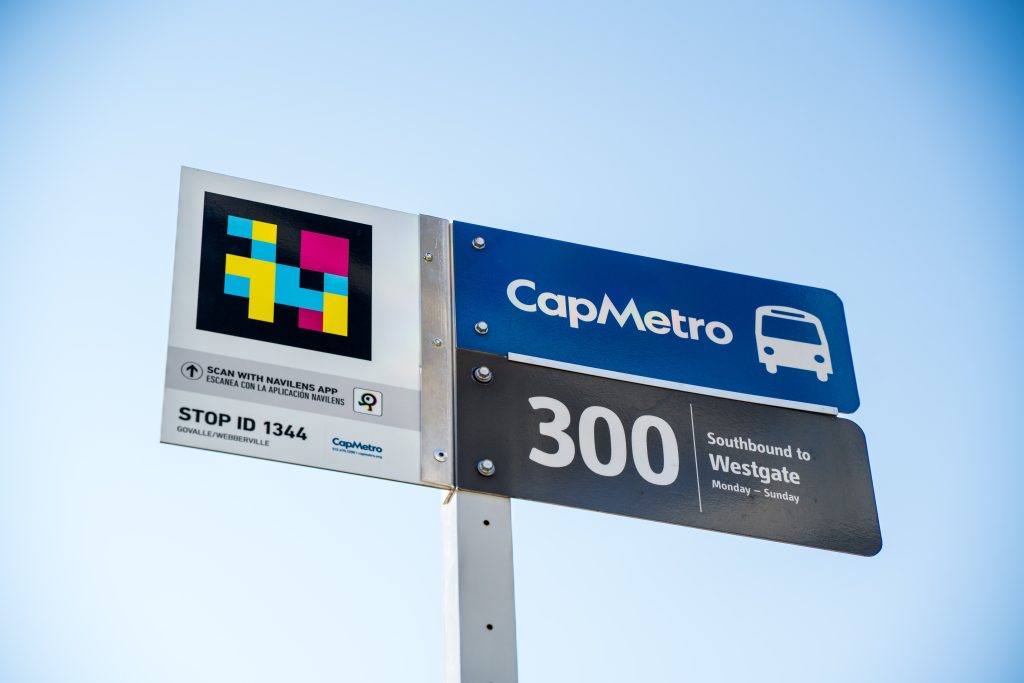
In the last couple of years, you may have seen colorful, high-contrast codes at bus stops along Routes 1, 801, and 300 near key destinations like UT West Mall, Crestview, and ACC Eastview. This is through a partnership with Navilens, and now, those codes have expanded along more routes and additional stops near the University of Texas, South Congress Transit Center and Tech Ridge Park & Ride, and even on buses.
Earlier this spring, CapMetro deployed Navilens Codes on the exterior and interior of 15 buses, allowing riders to access audio route and destination information while boarding and riding the vehicle.
What exactly does Navilens do? The technology allows riders to scan codes using the free Navilens App and their smartphone camera and receive audio information such as:
- Route numbers
- Direction of travel
- Stop identification
- Upcoming departures
Unlike traditional QR codes, NaviLens codes can be detected from much farther away and without requiring riders to precisely line up their camera, which makes them especially useful for those who are blind or have low vision.
CapMetro is also testing new features that provide guided audio instructions, directional tones and haptic feedback to help riders navigate between transit bays and move more confidently through transit centers.
“We’re looking at how these technologies can support the entire customer journey, from locating the stop to boarding the correct bus and navigating transfers,” Kareithi said. “That’s what makes this next phase so exciting.”
Testing More Precise Navigation with Waymap
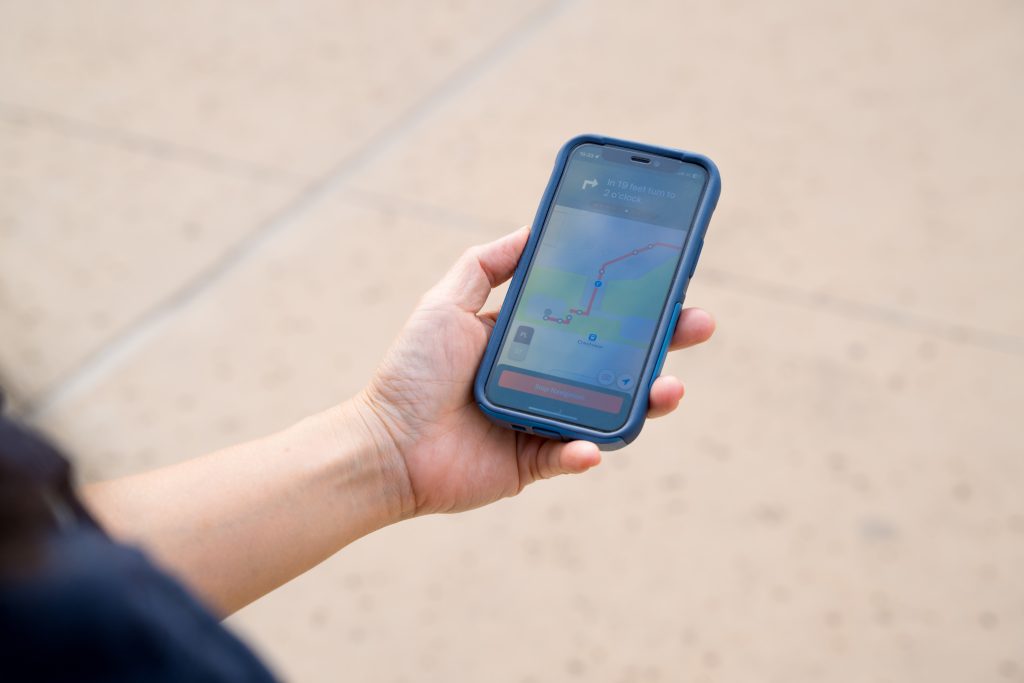
Alongside NaviLens, CapMetro continues to pilot Waymap, another wayfinding platform focused on highly detailed turn-by-turn navigation through an app on your phone.
“One of the most valuable parts of these pilots is that we’re testing different types of technology at the same time,” Kareithi said. “Every customer’s needs are different, and these projects help us better understand what solutions can make the biggest impact.”
Unlike many navigation apps that rely heavily on GPS, Waymap uses sensor-based positioning technology to provide more precise guidance around transit infrastructure and dense urban areas.
The technology is currently being tested at the same pilot locations as NaviLens, including areas near the University of Texas, Criss Cole Rehabilitation Center, and Texas School for the Blind and Visually Impaired.
Waymap provides step-by-step audio instructions designed to help riders locate stops, navigate transit facilities, and travel more independently through unfamiliar environments.
The latest updates to the app also introduced integrated trip-planning features, allowing riders to plan trips and receive navigation guidance within a single experience.
And another major update is on the way. This spring, Waymap is expected to relaunch with new tools that are expected to bring improved usability, enhanced visual contrast, expanded screen reader support and simplified navigation features.
Introducing Live Assistance with Aira
CapMetro has also launched a new pilot with Aira, a live visual interpreting service that connects riders with trained remote agents through a smartphone app. Right now, only a select few people are testing it out, but here’s how it works.
Using a phone camera, riders can connect with a live agent who can assist with:
- Finding bus stops
- Reading signage
- Navigating transit centers
- Understanding their surroundings in real time
While many accessibility technologies rely on automation, Aira introduces a human layer of support that can help riders navigate unexpected situations or unfamiliar environments more confidently.
The pilot, which will run through September 30, 2026, will help CapMetro evaluate how live navigation assistance could complement the agency’s other accessibility technology initiatives.
Helping Shape the Future of Accessibility at CapMetro
As these initiatives continue to grow, CapMetro is encouraging riders and members of the accessibility community to share feedback and experiences using the technologies. It will help shape future accessibility improvements and determine how these tools may continue evolving across the transit system.
“The most important feedback comes from the people actually using these tools every day,” Kareithi said. “Their experiences are helping guide what accessibility innovation looks like at CapMetro moving forward.”
If you’re using these technologies while riding CapMetro, you can share your feedback and help shape the future of accessible transit by visiting this webpage.